Rail route maps of the LRT & MRT Lines in Manila, Philippines
投稿日 Posted on
更新日 Updated on
This page is about railway track diagrams (wiring maps) of the metro, LRT and MRT lines in the Manila metropolitan area in the Philippines.

フィリピンのマニラ都市圏のメトロ、LRT・MRTの鉄道線路配線図です。

Esta página trata sobre mapas de rutas ferroviarias de las líneas de metro, LRT y MRT en el área metropolitana de Manila en Filipinas.

本頁介紹的 是 菲律賓 馬尼拉大都會區的地鐵、輕軌 和 捷運 路線的 鐵路路線圖。
Manila’s LRT is actually the first urban railway in Southeast Asia.
実は東南アジア初の都市鉄道である、マニラのLRT
El LRT de Manila es en realidad el primer ferrocarril urbano del sudeste asiático.
馬尼拉的 輕軌 其實 是 東南亞 第一條 城市鐵路。
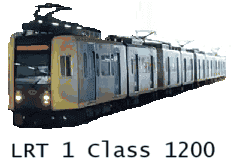
As of 2024, 3 urban railway lines are in operation in Manila, the capital of the Philippines: LRT 1, LRT 2, and MRT 3. LRT 1 is an elevated line whose first section opened in 1984, and is actually the first urban railway in Southeast Asia, ahead of countries such as Singapore, Thailand, and Malaysia. These railway lines are constructed in a grade-separated structure with roads, and are an important means of transportation for people in metropolitan Manila, including the suburban city of Quezon.
What's a little confusing is that LRT 2 uses large 22m trains even though it calls itself LRT, while Line 3, which calls itself MRT, uses small trains the size of trams. The reason for this is that while Lines 1 and 2 are operated by an operator called "Light Rail Transit Authority(LRTA)", Line 3 is operated by a different operator called "Manila Metrorail Transit System(MRTC)".
A partir de 2024, están en funcionamiento 3 líneas de ferrocarril urbano en Manila, la capital de Filipinas: LRT 1, LRT 2 y MRT 3. LRT 1 es una línea elevada cuyo primer tramo se inauguró en 1984, y es en realidad el primer ferrocarril urbano. en el sudeste asiático, por delante de países como Singapur, Tailandia y Malasia. Estas líneas ferroviarias están construidas en una estructura a desnivel con carreteras y son un medio de transporte importante para la gente en el área metropolitana de Manila, incluida la ciudad suburbana de Quezón.
Lo que es un poco confuso es que el LRT 2 utiliza trenes grandes de 22 m a pesar de que se llama a sí mismo LRT, mientras que la Línea 3, que se llama a sí mismo MRT, utiliza trenes pequeños del tamaño de tranvías. La razón de esto es que, mientras que las Líneas 1 y 2 son operadas por un operador llamado "Light Rail Transit Authority (LRTA)", la Línea 3 es operada por un operador diferente llamado "Manila Metrorail Transit System (MRTC)".
Ampliación de líneas ferroviarias en Manila
馬尼拉 鐵路線 擴建
Despite being a metropolitan area with over 10 million people, as of 2024, the total length of Manila's three railway lines will be less than 60 km, and a network of sufficient scale has not yet been completed. The population and transportation demand are increasing year by year, and railway line expansion work is being carried out in various locations.
The starting stations for Line 1 and Line 3 in the northeastern part of Quezon City are currently Roosevelt Station and North Avenue Station, respectively, but North Triangle Common Station is currently under construction. This station will also be connected to MRT Line 7 from the northeast, which is scheduled to open in 2025, and will serve as a junction station in Quezon City.
Additionally, the extended section of Line 1 from Baclaran Station to Dr. Santos Station is scheduled to open on November 16, 2024. This extended route will also include a station called Ninoy Aquino Station, which will provide access to Manila Ninoy Aquino International Airport, but this airport has multiple terminals, and even Terminal 1, which is the closest to the station, is a short walk away. Users should be careful as movement is required. And the Line 1 is planned to be extended further south beyond Dr. Santos Station.
Line 2 is planned to be extended westward to Manila North Harbor via Tutuban Station, with construction work expected to begin in 2025.
In addition, there used to be a former Philippine National Railways (PNR) line starting from Tutuban Station, but its operation is currently suspended due to upgrading to a new line centered on viaducts. The new line is scheduled to extend to Manila's other international airport, Clark International Airport, and once this line is completed, it is expected that the traffic situation in Manila, which has relied heavily on road transportation, will change dramatically.
Railway infrastructure in Manila has been poor up until now, but many railway lines are scheduled to open one after another, so keep an eye on future changes.
A pesar de ser un área metropolitana con más de 10 millones de habitantes, a partir de 2024 la longitud total de las tres líneas ferroviarias de Manila será inferior a 60 kilómetros y aún no se ha completado una red de escala suficiente. La población y la demanda de transporte aumentan año tras año y se están realizando obras de ampliación de las líneas ferroviarias en varios lugares.
Las estaciones de partida de las Líneas 1 y 3 en la parte noreste de Quezon City son actualmente la Estación Roosevelt y la Estación North Avenue, respectivamente, pero la Estación Común North Triangle está actualmente en construcción. Esta estación también estará conectada a la Línea 7 de MRT desde el noreste, cuya inauguración está prevista para 2025, y servirá como estación de unión en Quezon City.
Además, la sección ampliada de la Línea 1 desde la estación Baclaran hasta la estación Dr. Santos está programada para abrirse el 16 de noviembre de 2024. Esta ruta ampliada también incluirá una estación llamada Estación Ninoy Aquino, que brindará acceso al Aeropuerto Internacional Ninoy Aquino de Manila. pero este aeropuerto tiene múltiples terminales, e incluso la Terminal 1, que es la más cercana a la estación, está a pocos pasos. Los usuarios deben tener cuidado ya que se requiere movimiento. Y está previsto que la Línea 1 se extienda más al sur, más allá de la estación Dr. Santos.
Está previsto que la línea 2 se extienda hacia el oeste hasta el puerto norte de Manila a través de la estación Tutuban, y se espera que las obras de construcción comiencen en 2025.
Además, solía haber una antigua línea de Ferrocarriles Nacionales de Filipinas (PNR) que partía de la estación Tutuban, pero su operación actualmente está suspendida debido a la actualización a una nueva línea centrada en viaductos. Está previsto que la nueva línea se extienda hasta el otro aeropuerto internacional de Manila, el Aeropuerto Internacional Clark, y una vez que esté terminada, se espera que la situación del tráfico en Manila, que ha dependido en gran medida del transporte por carretera, cambie drásticamente.
La infraestructura ferroviaria en Manila ha sido deficiente hasta ahora, pero está previsto que muchas líneas ferroviarias se abran una tras otra, así que esté atento a los cambios futuros.


Leave a Reply