(San Miguel de Tucumán ~ Rosario)”Ferrocarril General Bartolomé Mitre” in Argentina (Rail Track Diagram map)
投稿日 Posted on
更新日 Updated on
This page is about railway track wiring route maps of the "General Mitre Railway(Rosario-Tucumán Branch Line)" from San Miguel de Tucumán to Rosario in Argentina.
(San Miguel de Tucumán ~ Rosario) Mapas de diagramas de vías Ferrovarias or Diagrama Ferrovario de "Ferrocarril General Bartolomé Mitre(Ramal ferroviario Rosario-Tucumán)" en Argentina.
The Iberian gauge (1,676mm) Mitre General Railway and the meter gauge (1,000mm) Belgrano Railway run between Rosario, the third most populous city in Argentina, and San Miguel de Tucuman, the fifth most populous city. This page focuses on the Mitre General Railway.

San Miguel de Tucuman is a large city in the northern part of Argentina and the capital of the province of Tucuman, with a population of over 800,000 people. It is a financial center in the northern region of Argentina, and is also famous as the city where Marco, the main character in "Three Thousand Leagues to Visit My Mother," meets his mother for the last time. Trains to Buenos Aires Retiro depart from Tucuman Mitre Station.

Immediately west of Tucuman Mitre Station are the rail tracks of the Belgrano General Railway. This station once had a meter gauge connecting line to the Belgrano General Railway, but it appears that the meter gauge track has now been removed. Mitre General Railway operates long-distance trains from Tucuman to Buenos Aires via Rosario and back twice a week.
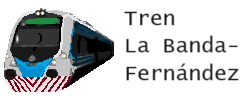
La Banda Station is the gateway to the region's city, Santiago del Estero. Regional trains run twice a day on the 40km stretch from La Banda Station to Fernández Station, and the train travels between La Banda Station and Fernández Station in about an hour. Only regional trains stop at Beltrán, Forres, and Fernández stations, while long-distance trains from Buenos Aires Station pass through.

In addition, from La Banda Station there is a meter gauge elevated urban railway (non-electrified) in Santiago del Estero called "Tren al Desarrollo", which operates at a maximum speed of 20km/h.
In the town of Pinto, there are many buildings built in early 20th century influenced by Italian architecture. Agriculture and livestock farming are active in this area, with crops such as cotton, corn, and soybeans being grown. The town of Ceres is famous for its pumpkin production.
Sunchales is the agricultural center of the region and is home to a dairy cooperative.
サンチャレスはこの地域の農業の中心地で、酪農協同組合の拠点があります。
Rafaela is a city with a population of approximately 110,000 people and is called the "Pearl of the West'' due to its natural, cultural, and architectural beauty. Rafaela has a thriving metalworking and dairy industry.
From San Lorenzo station, the line becomes double track for a while, but becomes single track again just before Granadero Baigoria station. This station still has traces of the tracks from when it was once a double track.
In Rosario, the train will arrive at Rosario Norte Station. The train will travel 852km from Tucuman to Rosario over 25 hours, turning around at Rosario Norte Station and heading to Retiro Station in the capital, Buenos Aires.


Leave a Reply